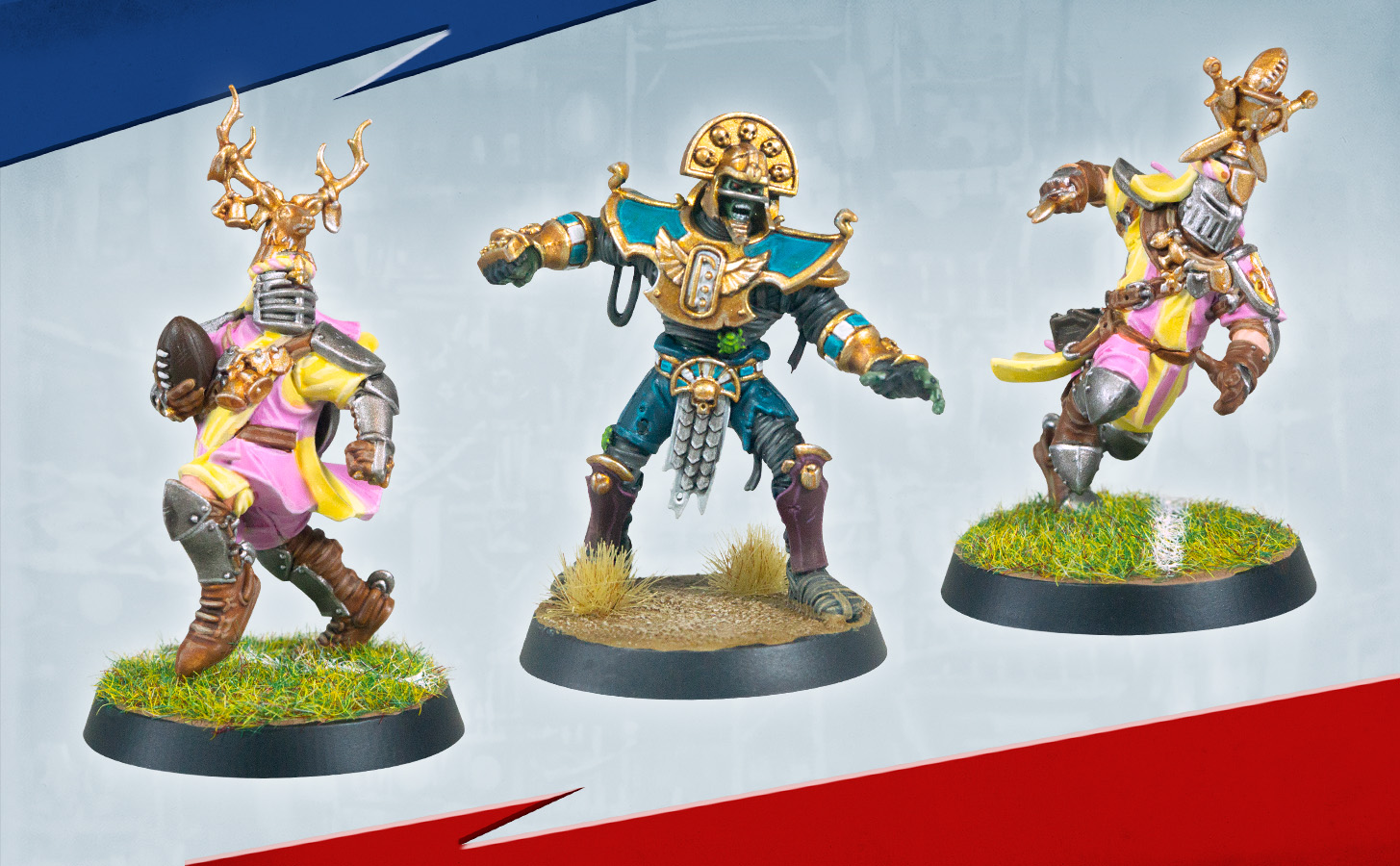




Blood Bowl Sevens is just around the corner, offering coaches an opportunity for a quick game over lunchtime, or even to play several in one evening! We’ve already got our kit on, but before stepping onto the pitch, we asked Tom from the Blood Bowl team to give us the lowdown on this exciting format.
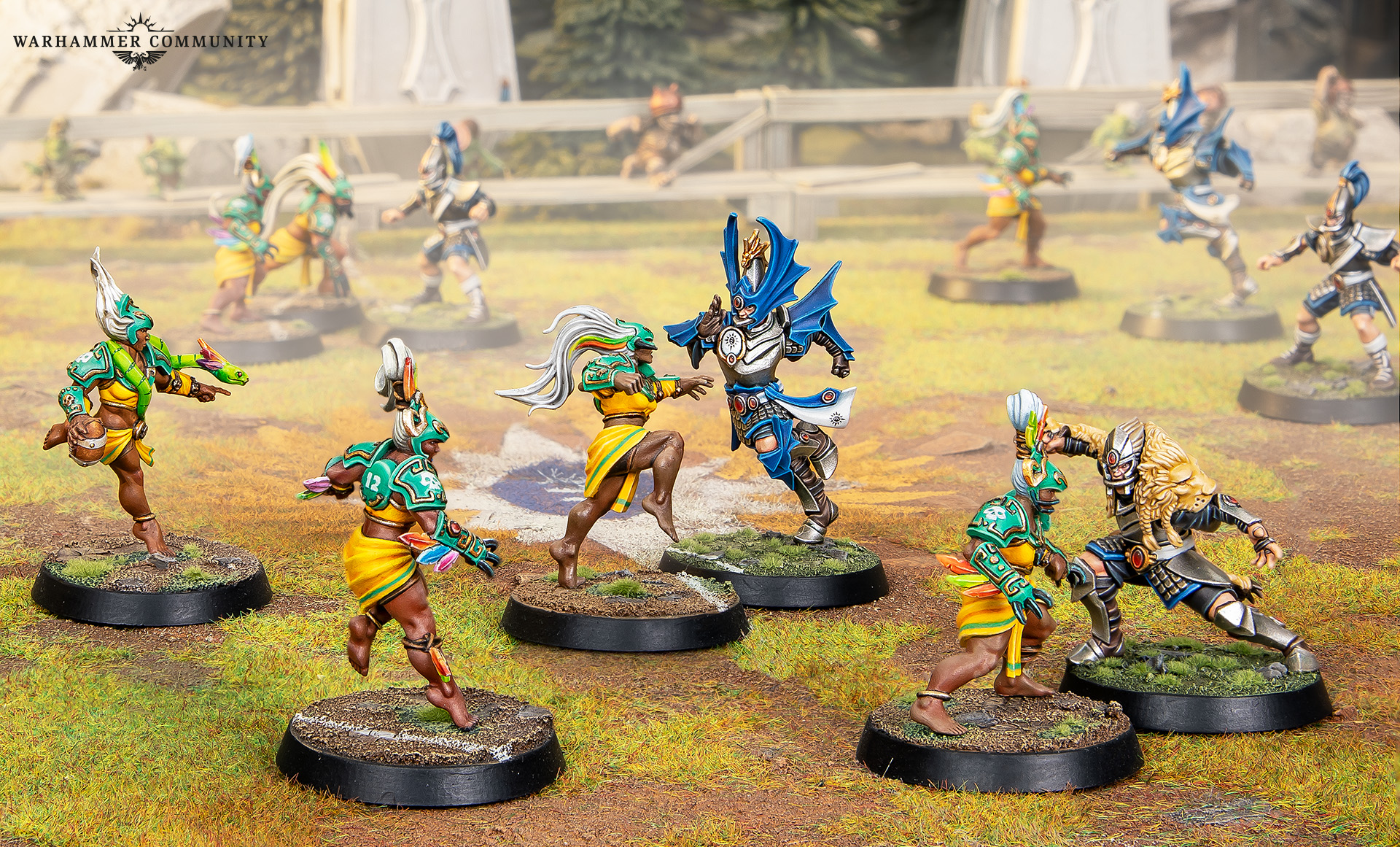
“I like the smaller pitch for Sevens, Jim, less space for opponents to run away!” – Bob
“Yes, Bob, but also fewer opponents for you to hit!” – Jim
“I hadn’t thought of that, Jim!” – Bob
Tom: Sevens is the answer to the eternal problem of how to fit more of your favourite fantasy football game into your life. It takes everything you know and love about Blood Bowl, throws it onto a smaller pitch and challenges you to secure victory within these new parameters. Whether you need a quick Blood Bowl fix or a league where more games can be played in the same number of weeks, Sevens is the game for you!
Smaller Games, Same Old Impact
Spike! Journal: Sevens includes everything you need to modify the core rules of Blood Bowl to play Sevens. The changes aren’t widespread – the majority of the rules from classic Blood Bowl remain the same – but those that are made are impactful. For starters, as the name suggests, Sevens teams are limited to seven players on the pitch at any one time – excluding dirty tricks from the Snotlings of course!
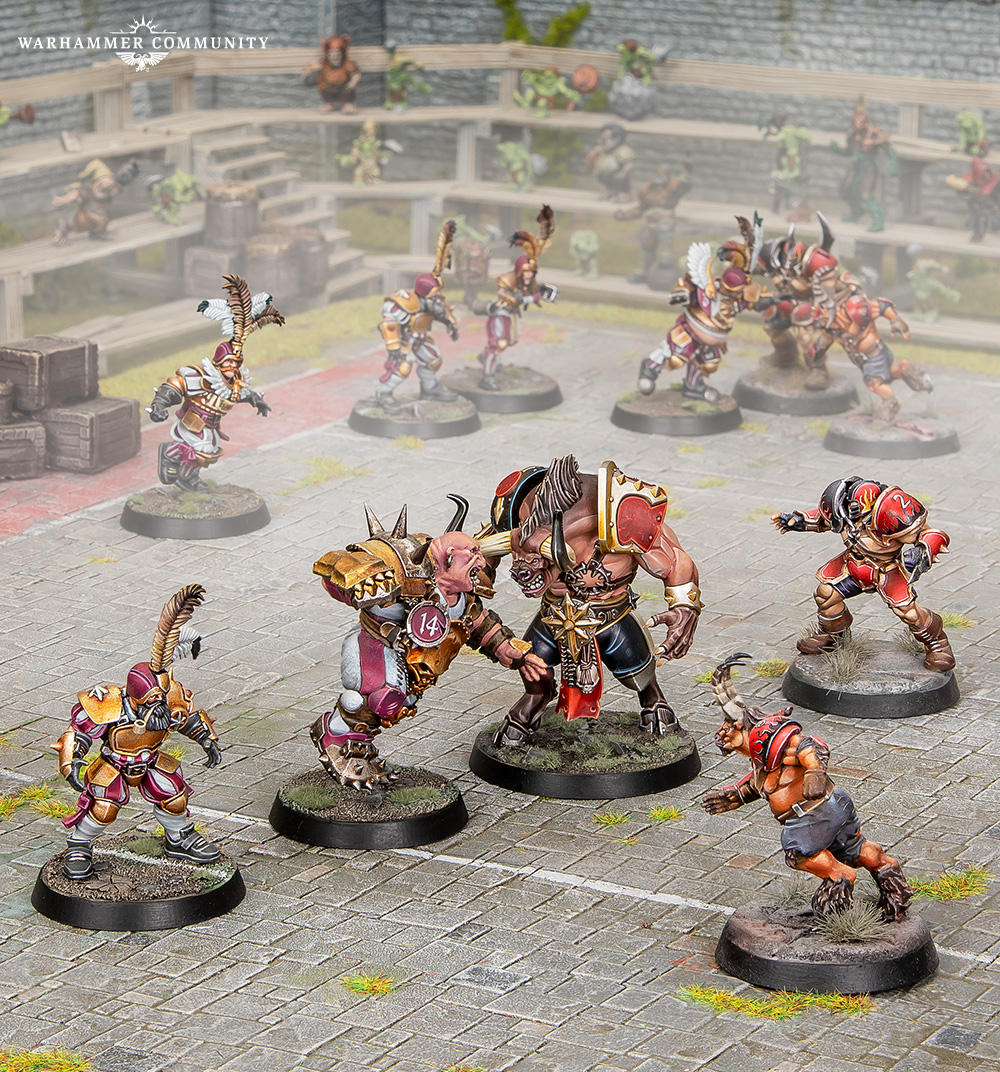
Now, fewer players on a regular pitch would make it incredibly hard to chase down Elves and give them a good kicking, and nobody wants that! To fix that, Sevens uses a smaller pitch, so there’s still lots of opportunity to get stuck into a good brawl. Lastly, the games are quick, with only six Turns a half – you better make every one count!
Drafting a Team
Drafting a team is similar to the full-sized version, though you only get 600,000 gold pieces to put your team together and there are restrictions on player positions. A Sevens team can include a maximum of 4 non-Lineman players, which really pushes some teams to think carefully about what players they want access to.
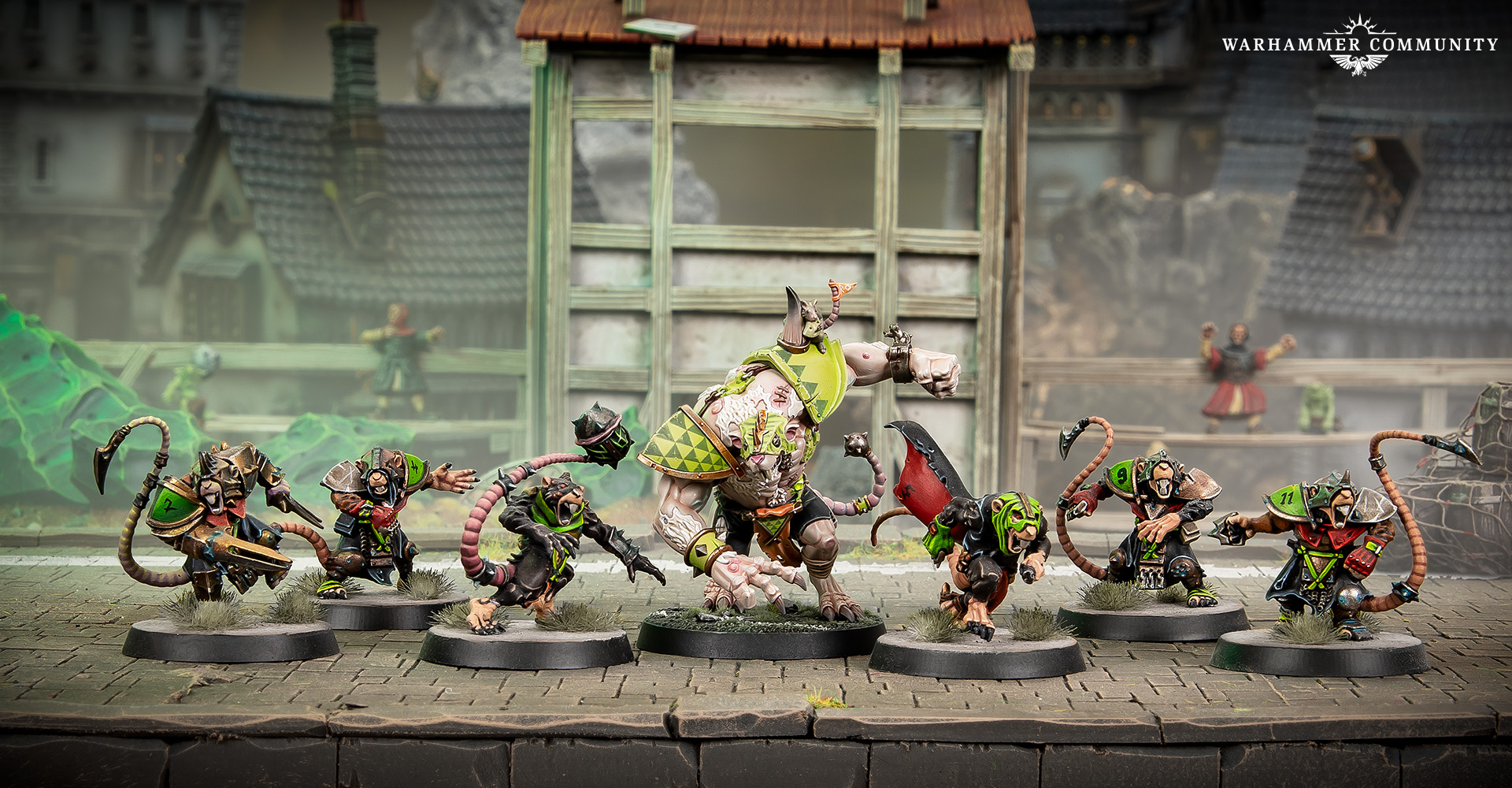
Sevens teams are mostly filled by rookies looking to break into the big leagues or old-timers kept around to earn a bit of extra gold before their contract expires. In Drafting terms this means re-rolls are more expensive – a cost of 100,000 gold pieces each for every team – and sideline staff are harder to come by.
This version of Sevens does introduce a small bit of reliability into your team though. When Drafting it, you select one Lineman player to be the team’s Veteran. This is the world-weary, long-serving player forced to mentor the newcomers to a team. In game terms, the player is slower due to a long career of on-pitch roughhousing but more reliable, offering that player a once-per-game re-roll for certain actions.
Matched and League Play
Sevens features every playmode you’d expect of Blood Bowl, including rules for Leagues and Matched Play.
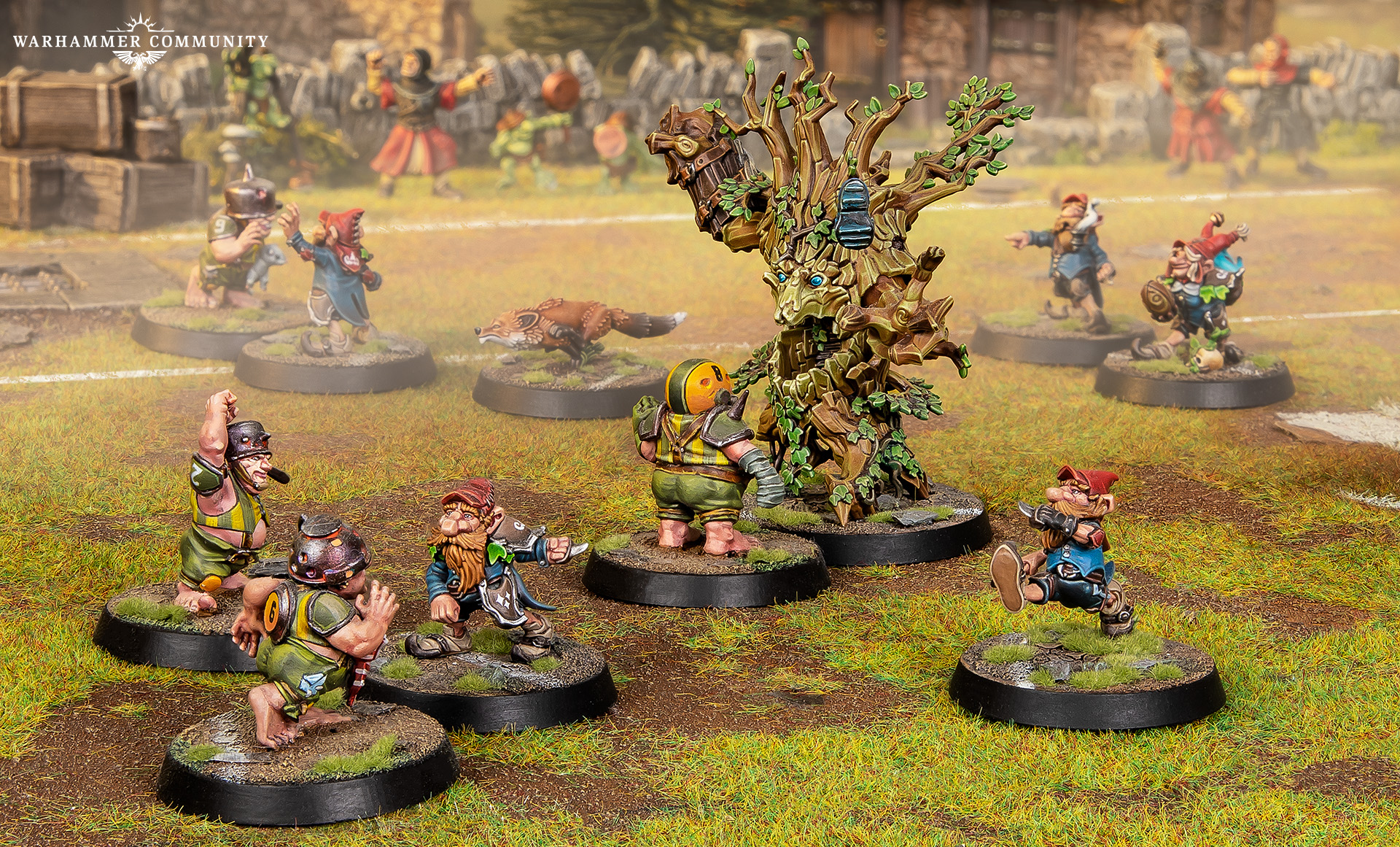
In Sevens Leagues, the biggest change is how players advance. Sevens players are harder to coach and train, on account of them being less skilled in general, so advancement is a bit more unreliable. Instead of SPP, one player per team gains a new random Skill at the end of each game. How much control you have over which player gains the advancement, and which Skill they gain, is determined by whether you want a Primary or Secondary skill, so choose carefully!
Thanks, Tom! Blood Bowl Spike! Journal Issue 22, which contains the rules for Sevens is available to pre-order from Saturday, along with a smaller sized pitch designed for the format. In the meantime, choose your team and start planning your tactics.