

After years of mentions in battletomes and rulebooks, we finally got our first glimpse of a Cities of Sigmar Cogfort at AdeptiCon, and now it’s time to learn more about these colossal creations.
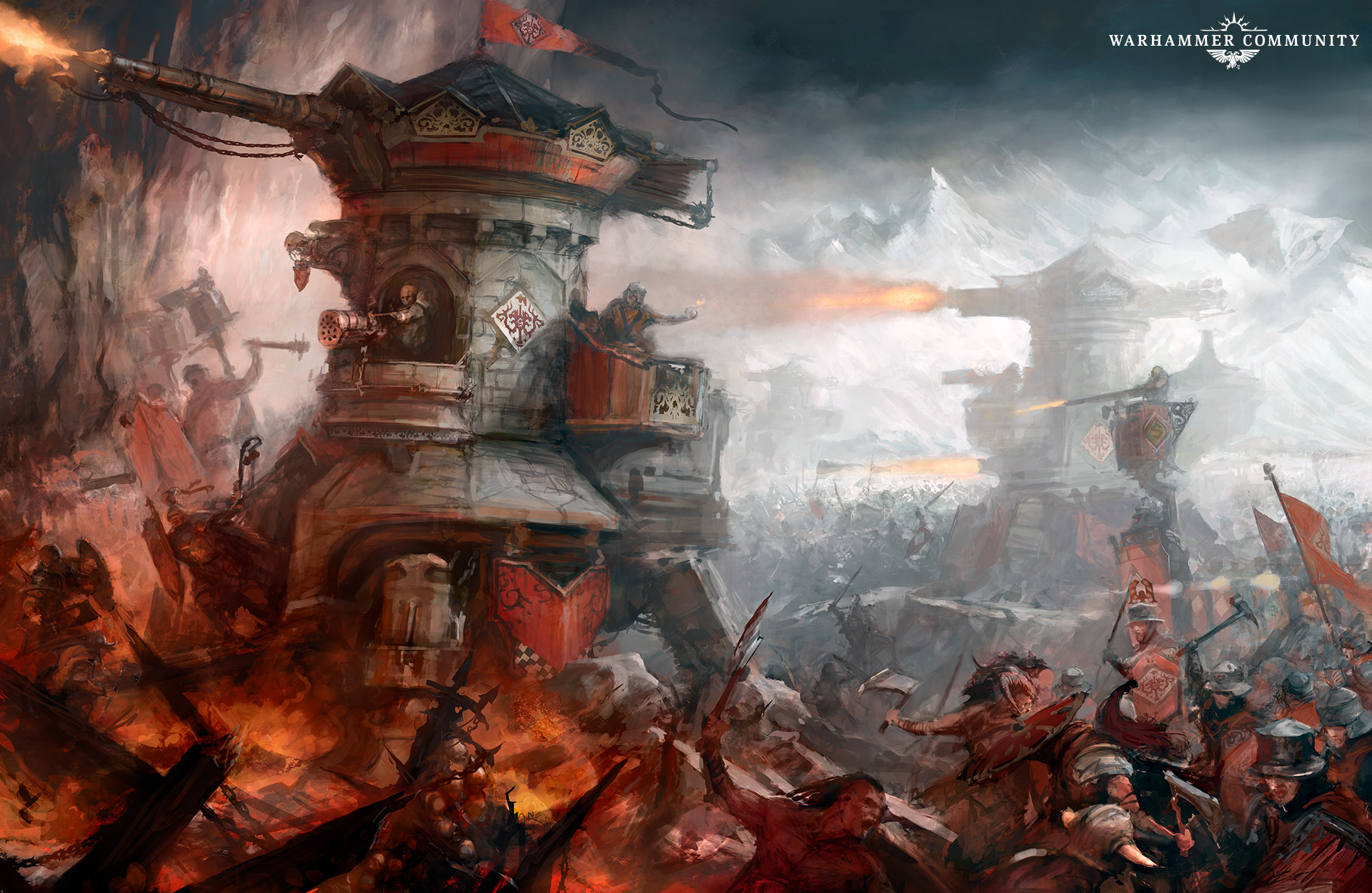
A Cogfort is a castle brought to life. Animated by pistons, gears, and volatile emberstone, these stone-and-metal titans march forward on grinding limbs, unleashing devastating firepower. They excel at spearheading sieges or driving home an assault, striking terror into Sigmar’s enemies with their looming presence.
Each Cogfort is owned by the Ironweld – the industrial powerhouse that drives Sigmar’s mortal empire on its quest to reclaim the realms. Of course, not all Cogfort crews keep their oaths to Sigmar – Castellan-Captain
Drephus sold the War Maiden to Archaon’s cause for the chance to sack his hated home-city of Silvergate and slay its duplicitous masters, while the three Cogforts known collectively as The Deathbond now serve Nagash, their pilots resurrected as pale revenants. There are even rumours that Hashut’s tyrannical priests have transformed captured Cogforts into mobile daemonic incubators.*
Cannonade Cogforts
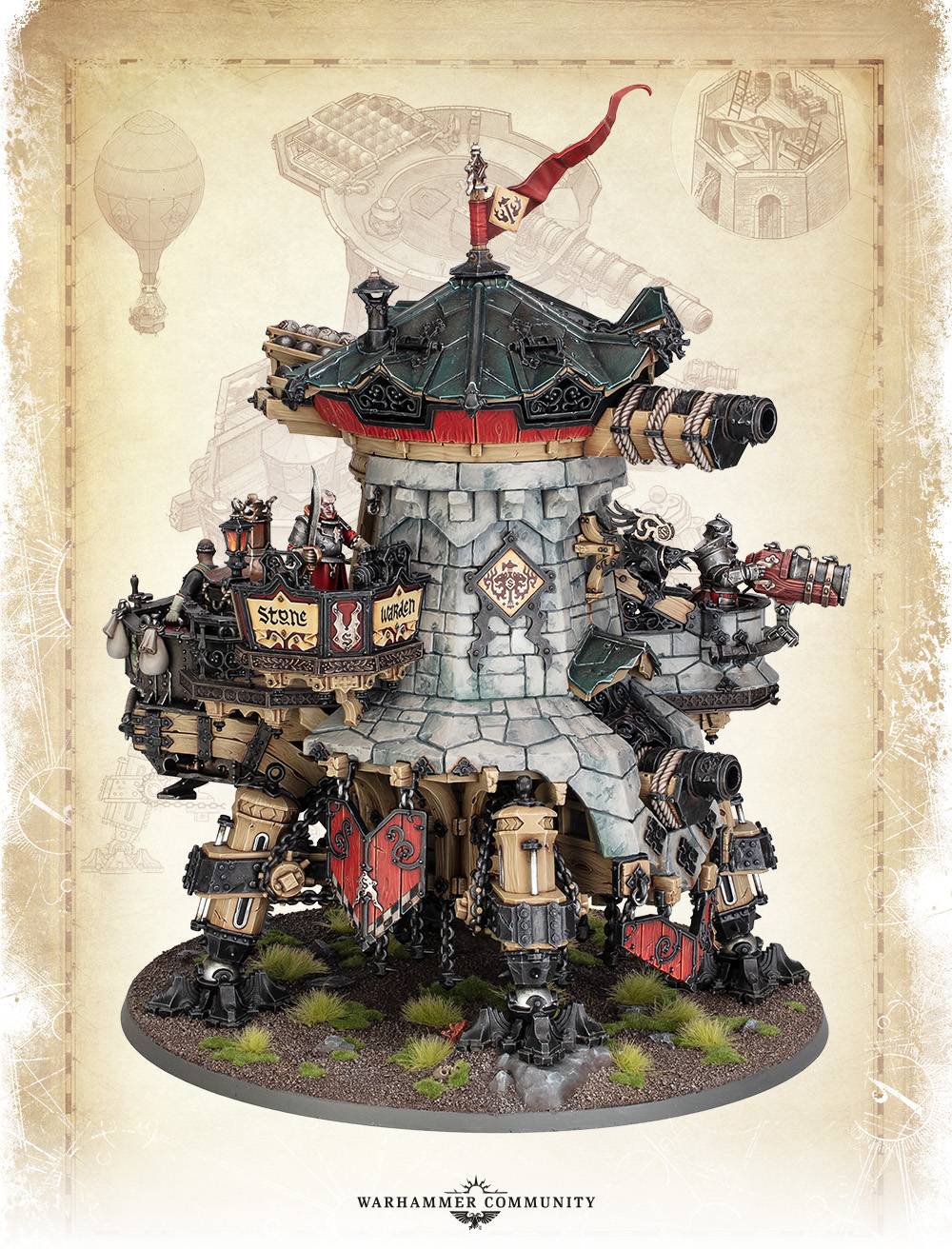
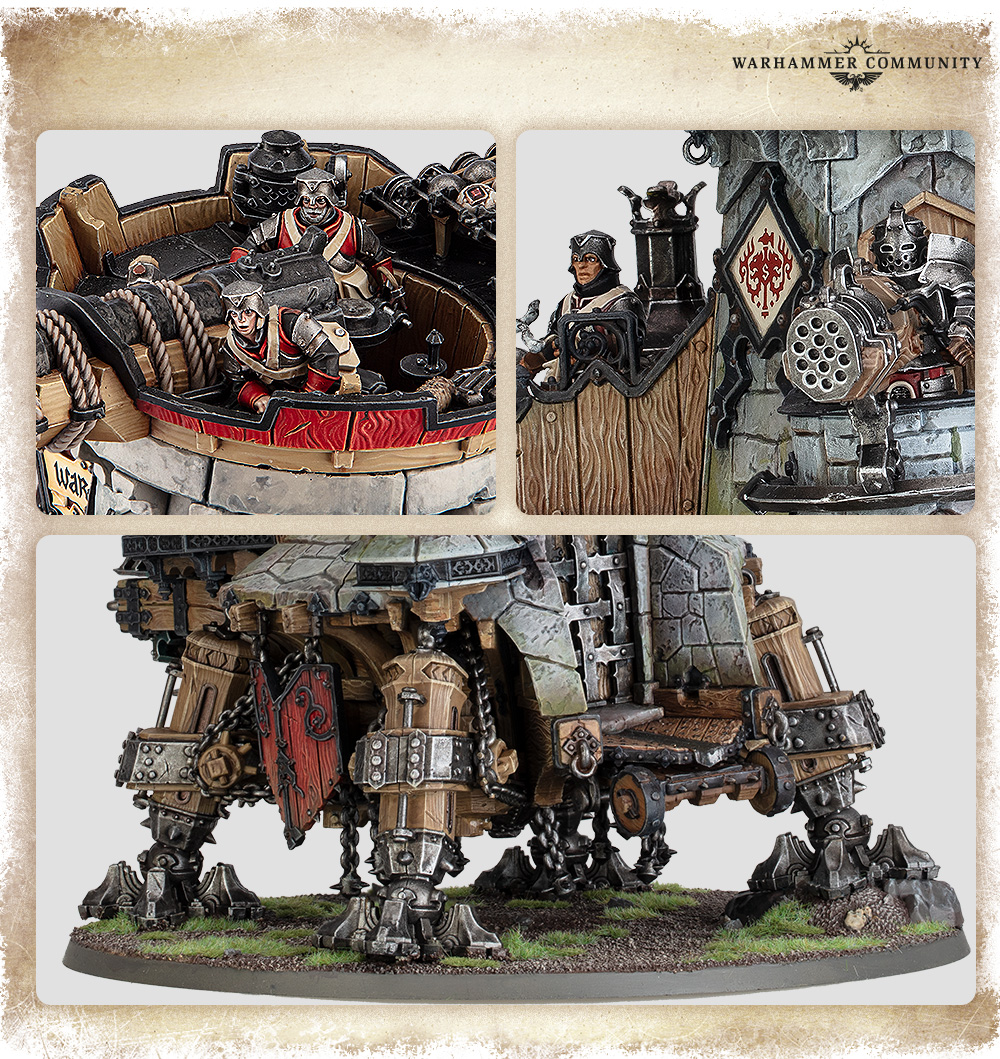
There are two main patterns of Cogfort. The Cannonade Cogfort is built for total battlefield domination – when its godbreaker cannon fires, the sound can be heard for miles around. A true monster of a weapon, the godbreaker was originally designed to bring down Mega-Gargants and other behemoths, but has been adapted over the years to engage other targets. Loading racks at the rear of the turret and the lower firing chamber are stuffed with different types of ammunition, from crude but effective cannonballs to runic shot imbued with anti-aetheric power and containers of grapeshot designed to shred infantry at close range.
Conqueror Cogforts
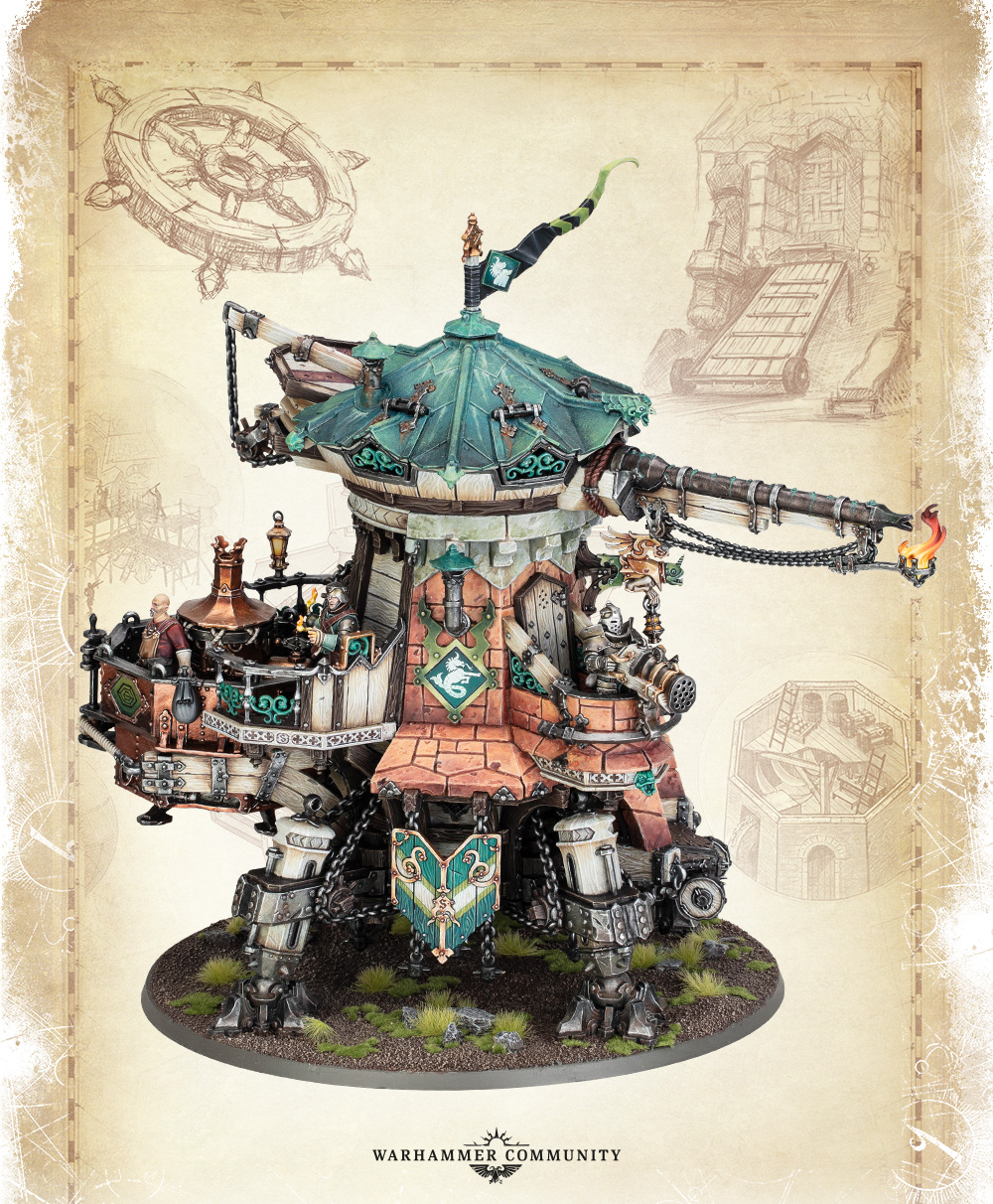
The Conqueror Cogfort exchanges a conventional main gun for a realmscorcher flame cannon – a truly terrifying weapon that vents torrents of flesh-melting flame across the battlefield. As the enemy lies burning, the Conqueror crouches low, the great portcullis in its belly opening to unveil an assault ramp. From the Cogfort’s interior charge Steelhelms and Fusiliers, roaring their war-songs and battle cries as they advance into terrain still smouldering from the Conqueror’s opening salvo.**
Inside the Cogfort
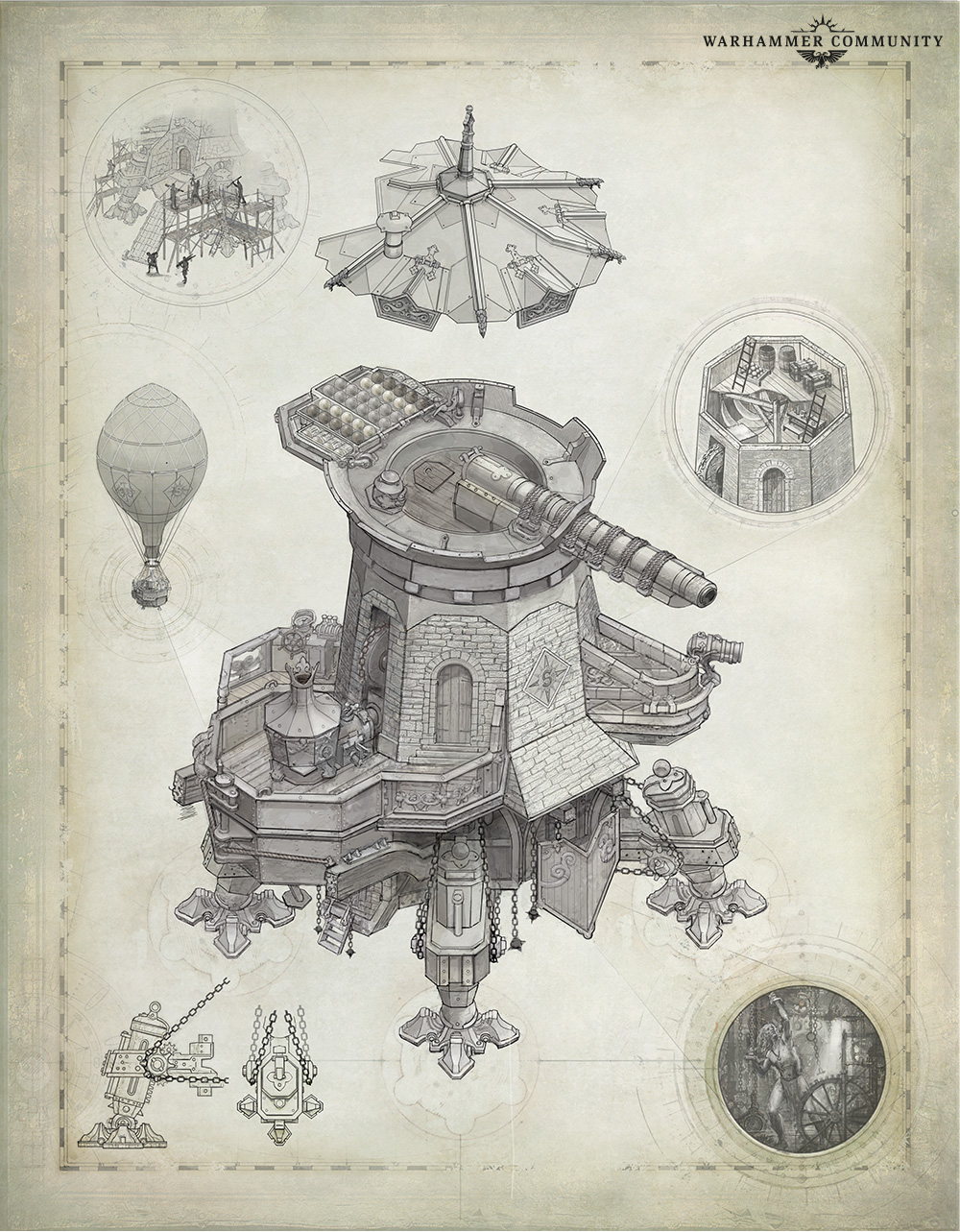
Our spies have managed to get hold of this blueprint of a Cogfort. The pilot, often known as the “puppeteer”, hauls activation chains to move the vehicle’s limbs and rotate it on its axis. These link to the tendon-chains on the legs of the Cogfort, which are often seen as a weak point by enemies – but they are forged from rare metals, making them almost impossible to sever.
By necessity, repairs and maintenance must be performed in the field, while the crew must make do with cramped quarters, made up of little more than racks of string hammocks. By far the most precious component of a Cogfort is the arco-combustor – the steam-venting, rattling engine, fuelled by emberstone.
So precious is this engine that it is attached to a dirigible, ensuring that even if the Cogfort is lost, the priceless engine might be recovered.
We’ll have more on the Cogfort soon – including a look at its rules, the new Iron March Army of Renown that opens up new abilities when you take lots of Cogforts, and the Regiment of Renown rules that let you add one of these titans to any Warhammer Age of Sigmar army.
* In fact, Cogforts have been seen in the service of every faction in the Mortal Realms.
** Flaming weapons and transport capacity? That might just catch on.