



One of the big changes to the rules in the new edition of Warhammer 40,000 is how terrain works, so today we’re going through the new rules and finding out how the new edition makes room for ever more diverse battlefields supporting epic Warhammer battles.
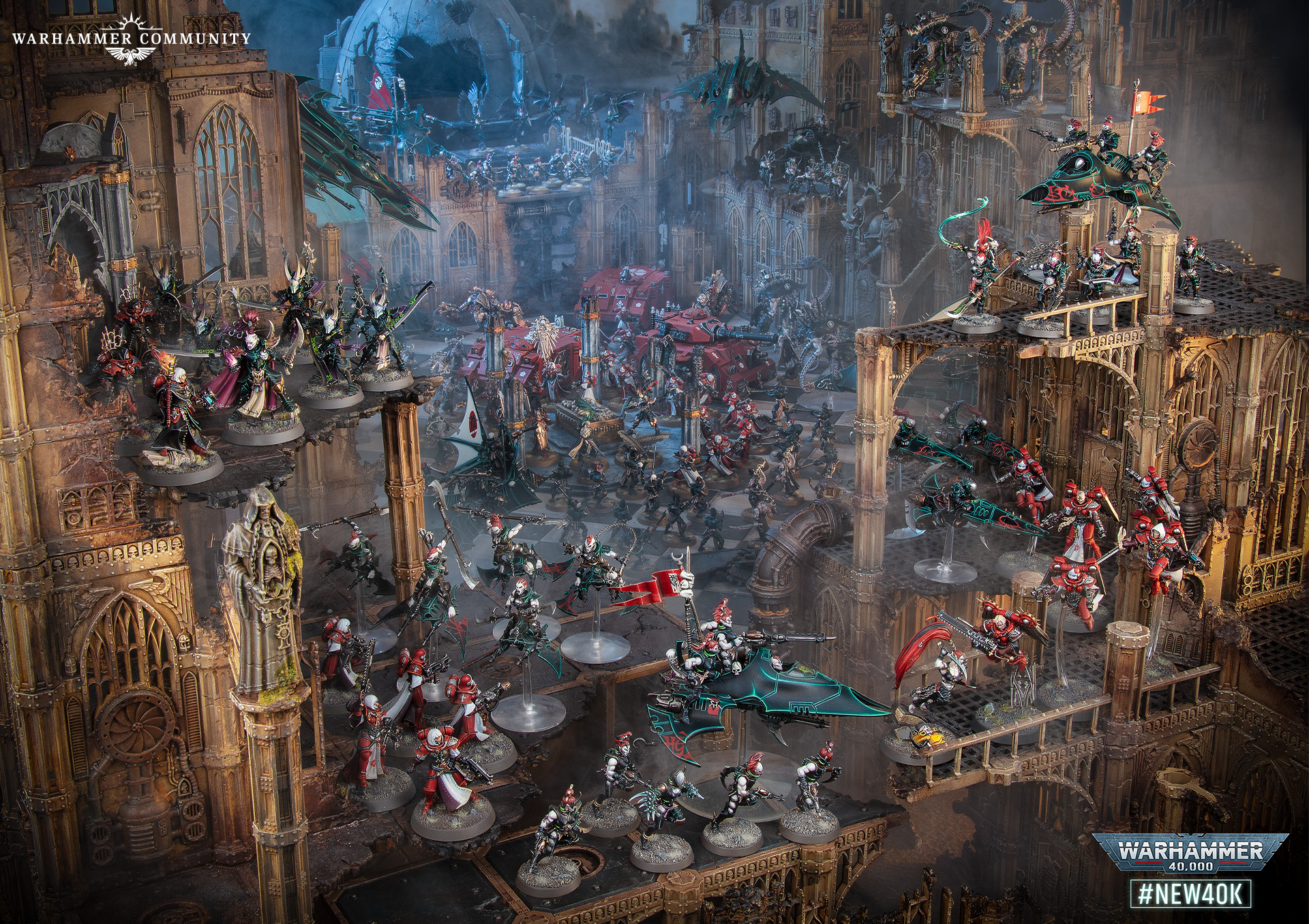
Terrain is made up of two components: terrain features and terrain areas.
Terrain features are individual pieces of scenery, such as ruins, barricades, trees, rocks, and anything else you could conceivably encounter on the battlefields of the 41st millennium. Terrain features will always be placed on (or sometimes used to denote the edge of) a terrain area. Several key changes now allow for a wider variety of terrain features on the battlefield, and a greater degree of interaction with terrain than before. A terrain area is the footprint on the battlefield under the effects of that scenery, and these effects are undergoing some big changes compared with the current edition.
Foremost amongst these changes is the addition of the Hidden rule. Infantry, Beast, and Swarm models inside a terrain area can be Hidden as long as their unit didn’t shoot in the current or preceding player turn (and so will be hidden at the start of the game). While hidden, a model is only visible to enemy units within their detection range – which is usually 15” – so you can deploy your models a lot more freely without worrying about a first-turn barrage.
Additionally, most terrain is Obscuring, much as it is today. Obscuring terrain areas cannot be seen entirely through, so even large models and big units can use sections of terrain to avoid enemy fire. Infantry, Beasts and Swarm units in terrain areas also gain the benefit of cover, which in the new edition gives your opponent a -1 penalty to their Ballistic Skill, rather than the +1 bonus to armour saves you receive now.
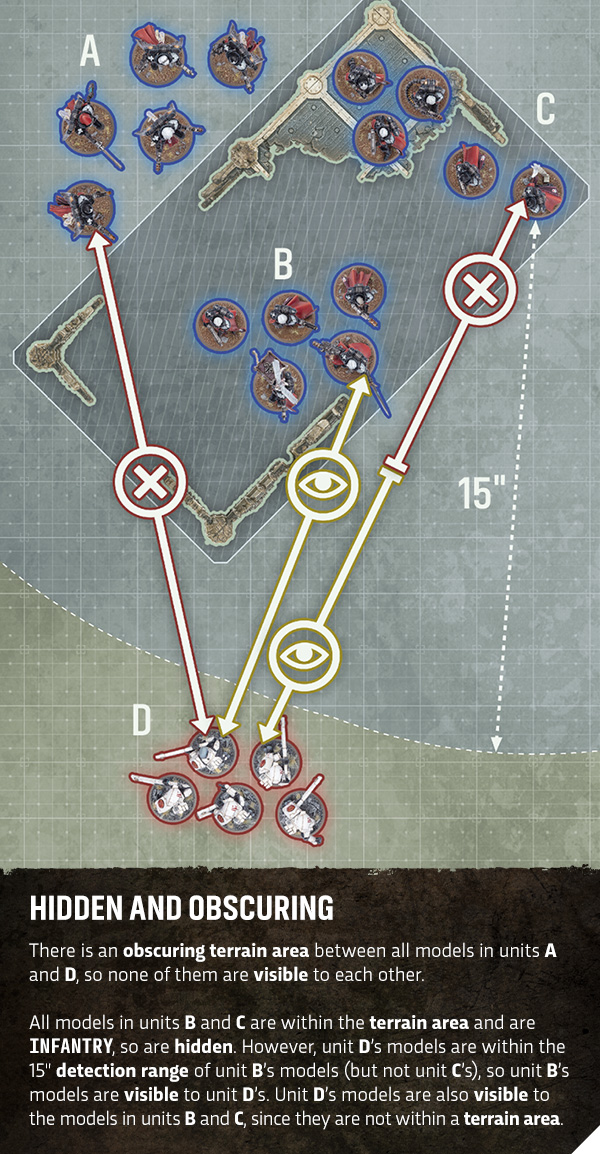
Hidden and Obscuring
There is an obscuring terrain area between all models in units A and D, so none of them are visible to each other.
All models in units B and C are within the terrain area and are INFANTRY, so are hidden. However, unit D’s models are within the 15" detection range of unit B’s models (but not unit C’s), so unit B’s models are visible to unit D’s. Unit D’s models are also visible to the models in units B and C, since they are not within a terrain area.
Another change in the new edition centres on recommended terrain layouts. Last week, we showed you one half of the Mission generated when an army with the Disruption Force Disposition battles an enemy with the Take and Hold Force Disposition. The other half – Determined Acquisition – is their opponent’s briefing.
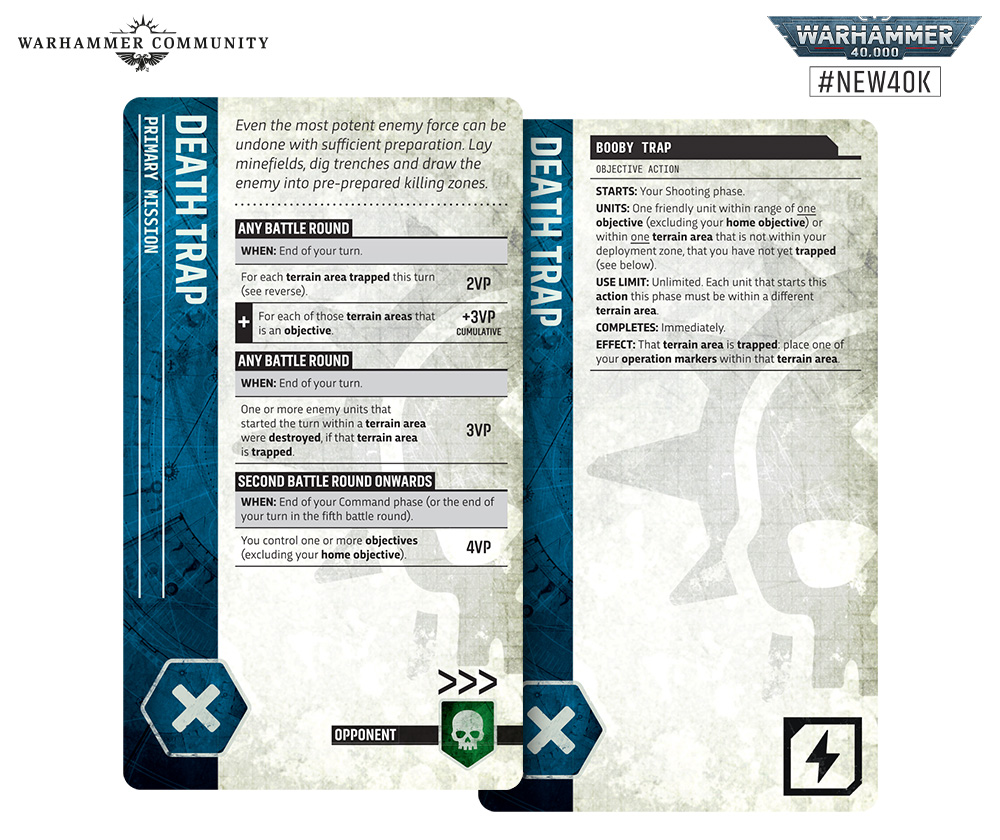
The Primary Mission for a Disruption force taking on a Take and Hold opponent
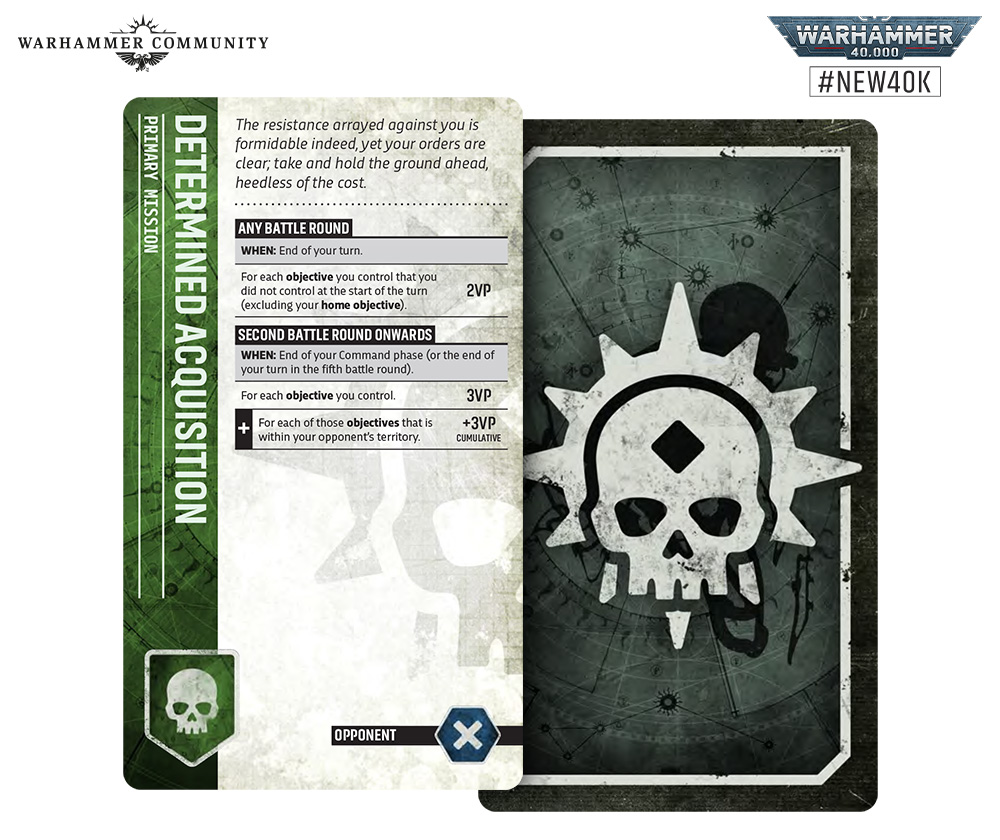
The Primary Mission for a Take and Hold force taking on a Disruption opponent
Alongside these objectives, each mission suggests three possible terrain layouts for your battle – here are two of them.
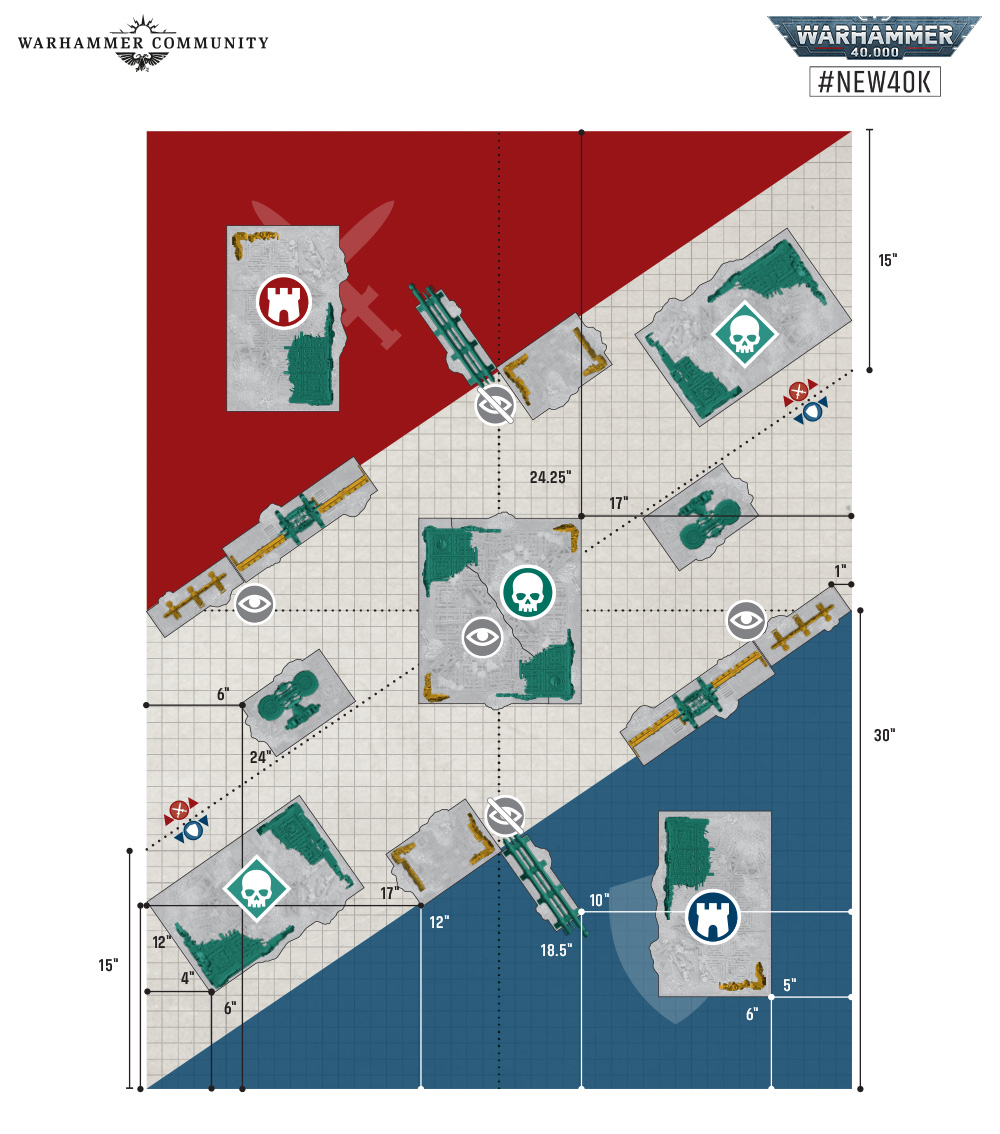
Crucible of Battle layout
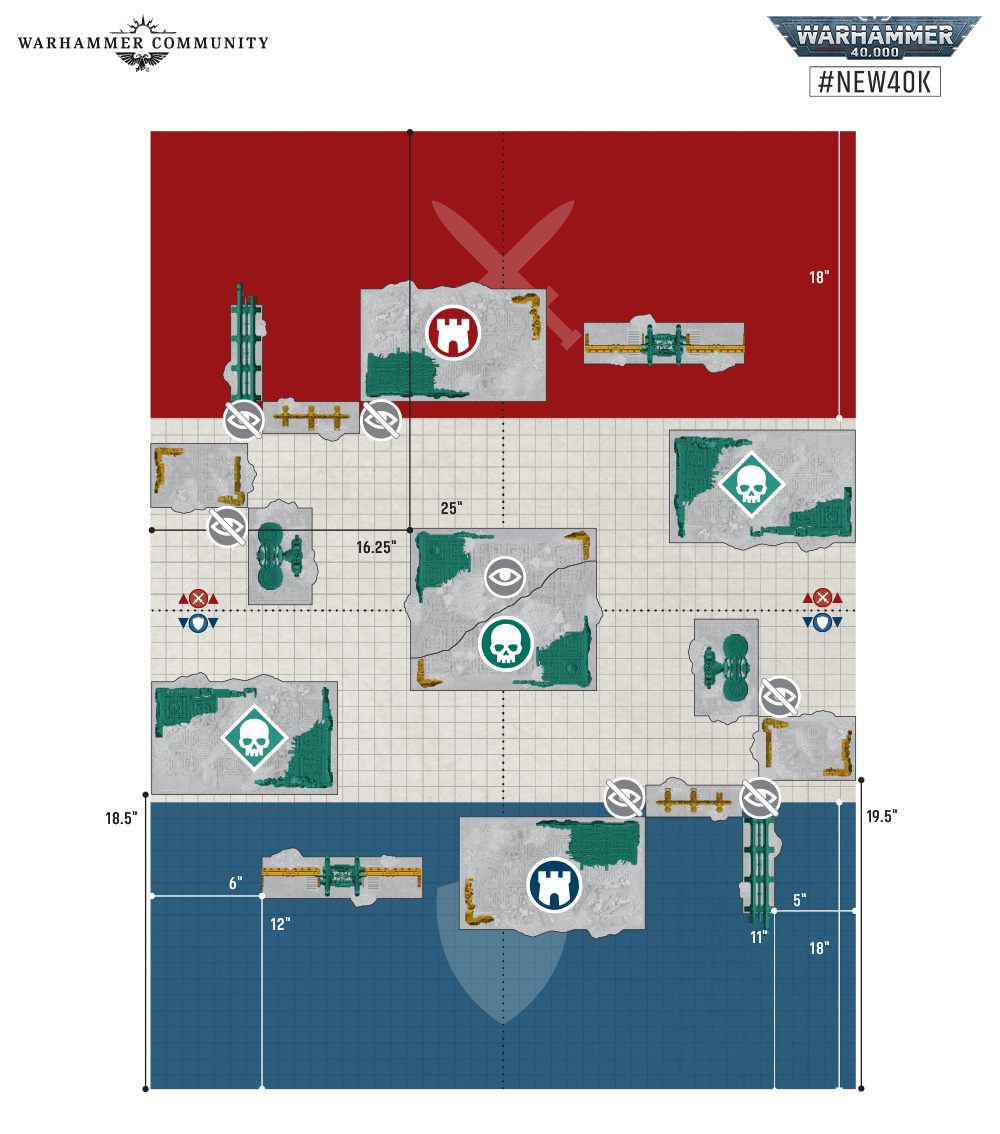
Hammer & Anvil layout
These layouts have been designed with this specific battle in mind, to help ensure a balanced match whilst reinforcing the story told by the mission, whether you’re playing at the World Championships or on your kitchen table. Of course, if you are playing a casual game with friends, you are welcome to set up your terrain in any way you like.
You’ll notice on the map there are a number of long, thin terrain areas. Since they are still Obscuring, they create new opportunities for different types of terrain, as units can remain out of line of sight just behind the footprint of the area. In our diagram, these are represented by Mechanicus barricades and field generators, but you can fill these areas with whatever terrain suits your collection – do you prefer trees? Ruins? Strange xenos growths? You can build your battlefield your way, even while using these tournament-approved layouts, meaning your games will look great and tell a compelling story.
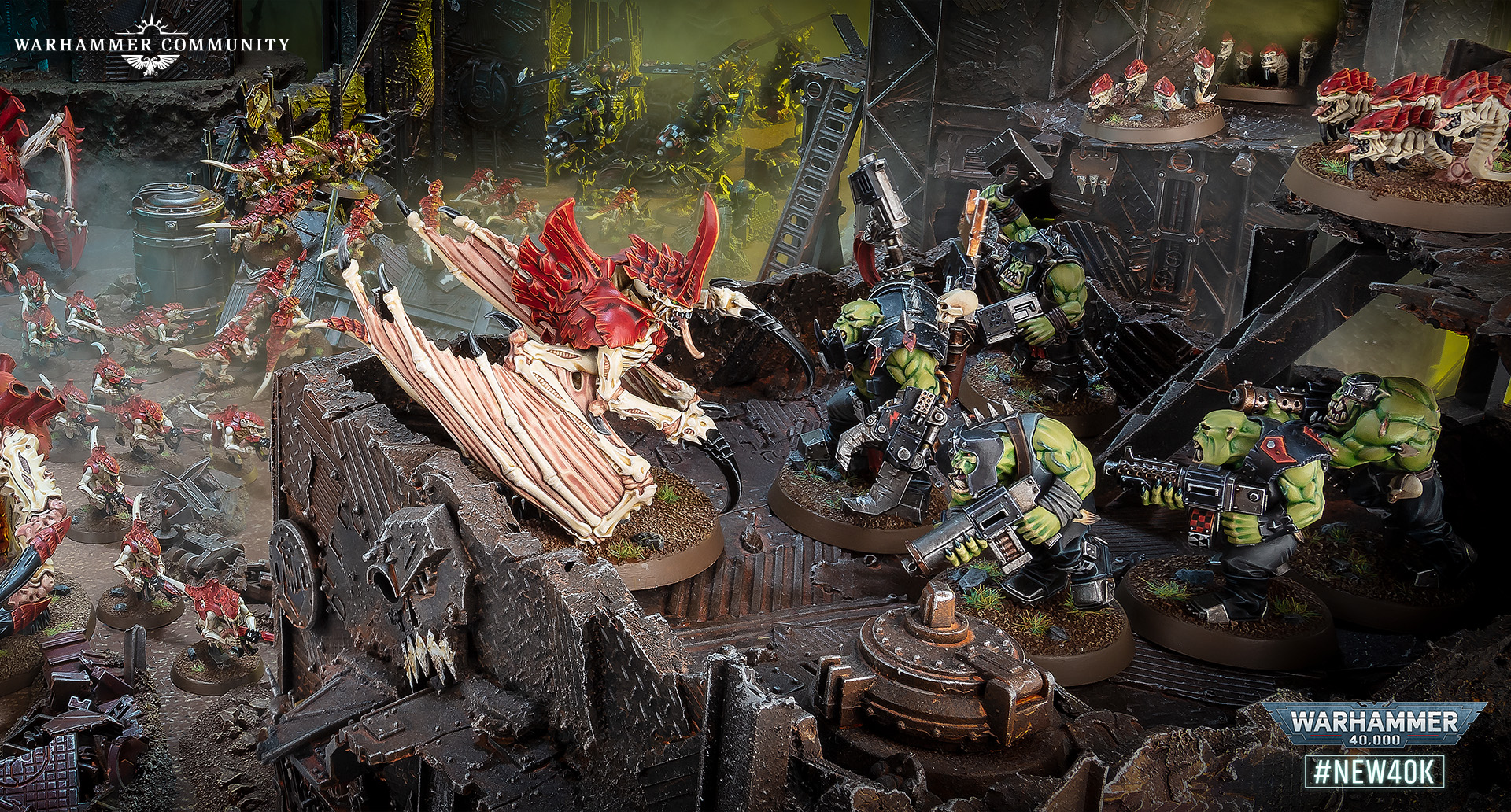
Large ruins still have a place, especially on larger midfield areas of terrain, and the physical features of terrain still matter for drawing line of sight into and out of terrain areas. It’s not all about the 2D footprint of the terrain, though. Height also plays a bigger role. In the current edition, units like heavy weapon teams seldom ascend the upper floors of ruins, as doing so exposes them to fire from across the table. With the hidden rule, you can safely access the upper levels of terrain, safe from long range enemy fire, at least until your unit has taken their first shots. You can now also take advantage of the Plunging Fire rule to give your unit a +1 to their Ballistic Skill, effectively cancelling out the benefit of cover, or make a devastating attack on an enemy unit caught out in the open.
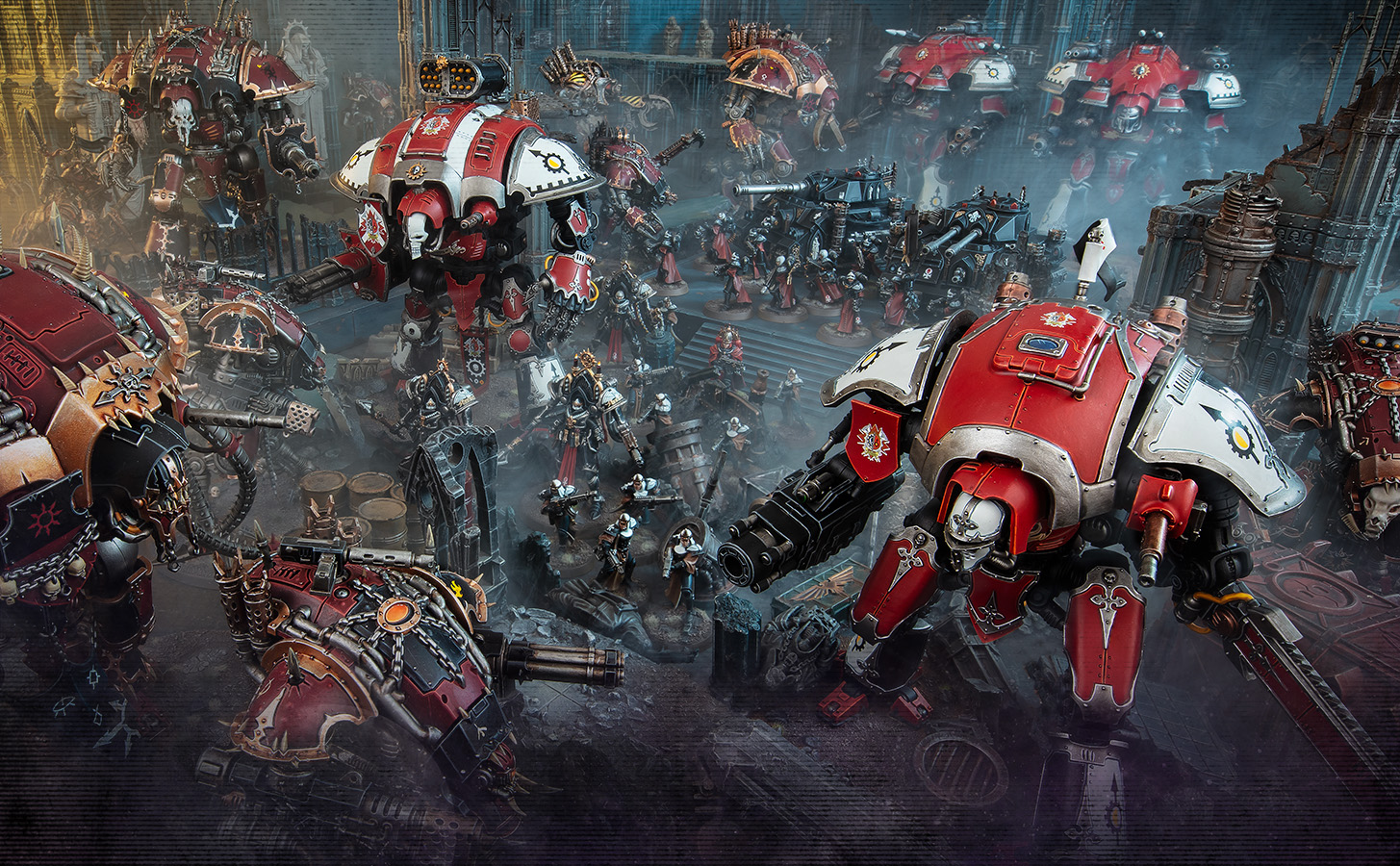
Particularly tall models with the TOWERING keyword – like Imperial Knights – also get to unleash Plunging Fire on ground-level units within 12”.
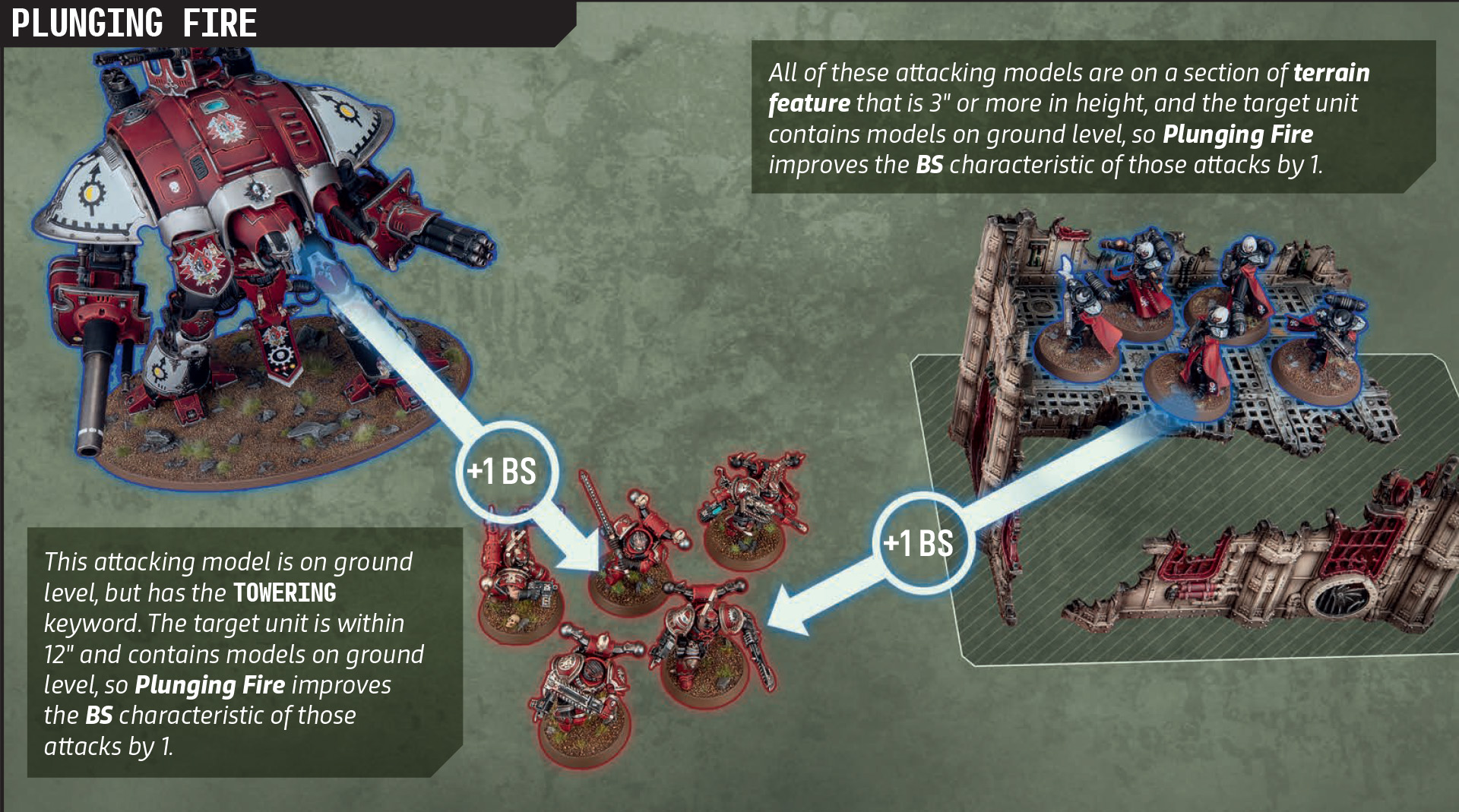
Plunging Fire
For the unit on the right, all of these attacking models are on a section of terrain feature that is 3" or more in height, and the target unit contains models on ground level, so Plunging Fire improves the BS characteristic of those attacks by 1.
For the Imperial Knight on the left, this attacking model is on ground level, but has the TOWERING keyword. The target unit is within 12" and contains models on ground level, so Plunging Fire improves the BS characteristic of those attacks by 1.
A set of Terrain Areas footprints will be available to purchase alongside the new edition. These already work well with some of the existing War Zone terrain sets, and future scenery sets are already being designed with these templates in mind.
You may want to create your own terrain area footprints to match your battlefield or basing scheme – a great little hobby project to help create a thematic board to play on.
You’ll need the following sizes for the standard mission layouts:
Four large rectangles – 7” x 11.5”
Two large right-angle triangles – 8” x 11.5”
Four medium rectangles – 6” x 4”
Two long lines – 10” x 2.5”
Four short lines – 6” x 2”
These changes allow for more variety in scenery pieces, more interactive match-ups, better stories, and exciting, close-fought games. They also present a great opportunity for the average Warhammer 40,000 gaming experience to feel familiar and accessible on tables the world over, whilst still enabling varied and thematic terrain features on every battlefield.
Later in the week, we’ll be looking at how objectives work with these new terrain rules to create a really thematic experience.
In the meantime, make sure to sign up for our newsletter so you don’t miss out on the latest reveals from the new edition of Warhammer 40,000.
-bn3bmfgrie.jpg)