

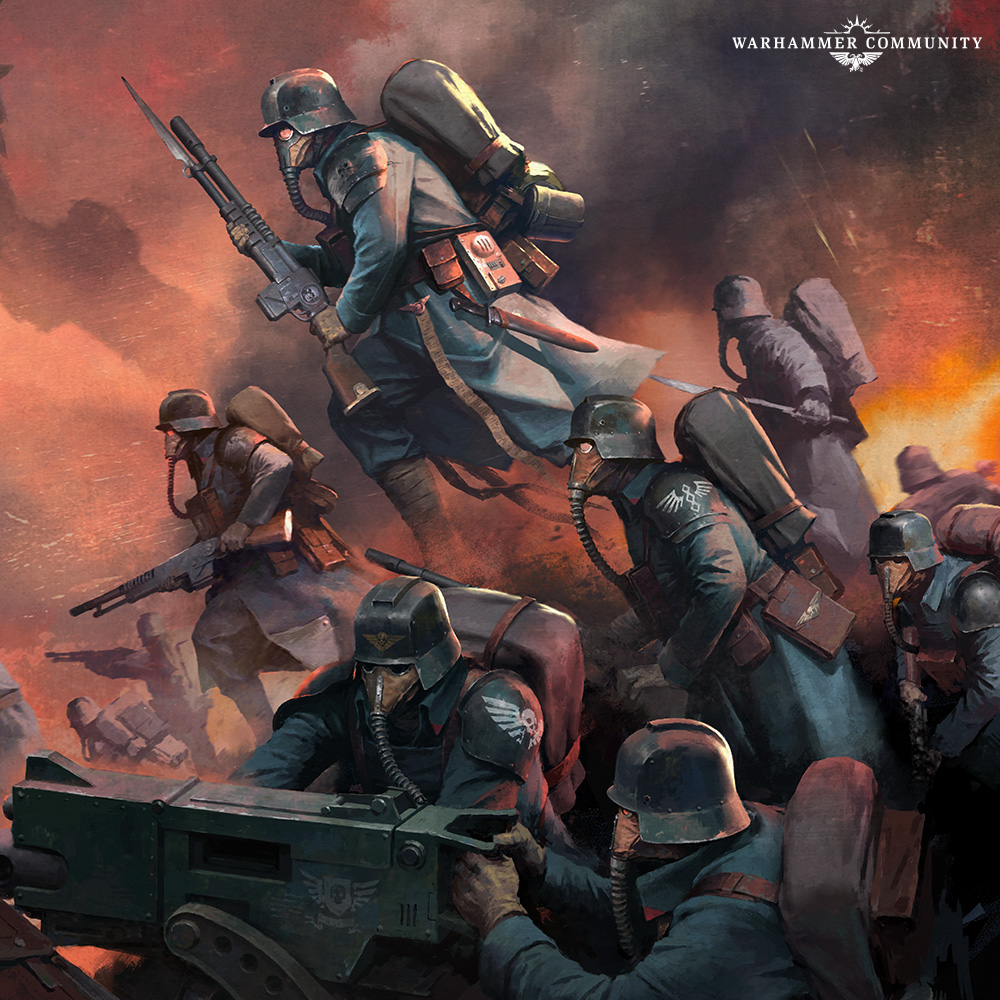
The Death Korps of Krieg are legendary for their die-hard zealotry, and while that’s usually something to be celebrated, it’s a royal pain in the backside when you’re trying to get them off a doomed world. Commissar Hesh finds this out the hard way in the new Black Library novel Death Rider, and to get a closer look at what’s coming up in this book, we sat down for a chat with author (and former Warhammer Community luminary*) Rhuairidh James.

Warhammer Community: Could you briefly summarise what Death Rider is about?
Rhuairidh: It’s the end of the war on Rezlan VI. The Imperium has the T’au on the run, and the Navy and the Astra Militarum are competing to perform the coup de grace. Valian Hesh, a Commissar of the Death Korps, is in the planet’s northern continent, making preparations for some combined manoeuvres with other regiments. Then, much to everyone’s horror, the flagship of the Rezlan VI campaign, Caedes Omnis, crashes into the planet and detonates its magazines.
The entire planet is plunged into freefall. The ecology collapses, the air is poison, and the radiation levels are ticking up every day. Valian and his adjutant, Jens, manage, almost miraculously, to survive, riding south to the evacuation point, only to discover the Death Korps are still in the fight. It’s Valian’s job to get his regiment back before they plunge into the T’au lines. He’s the only person with the authority to stop them. If he doesn’t, they will all die.
What follows is a brutal journey where Valian has to confront the nature of both the Death Korps of Krieg, and himself.
WarCom: For you, what makes the Death Korps of Krieg such compelling characters when most of them are faceless cogs in a grinding war machine?
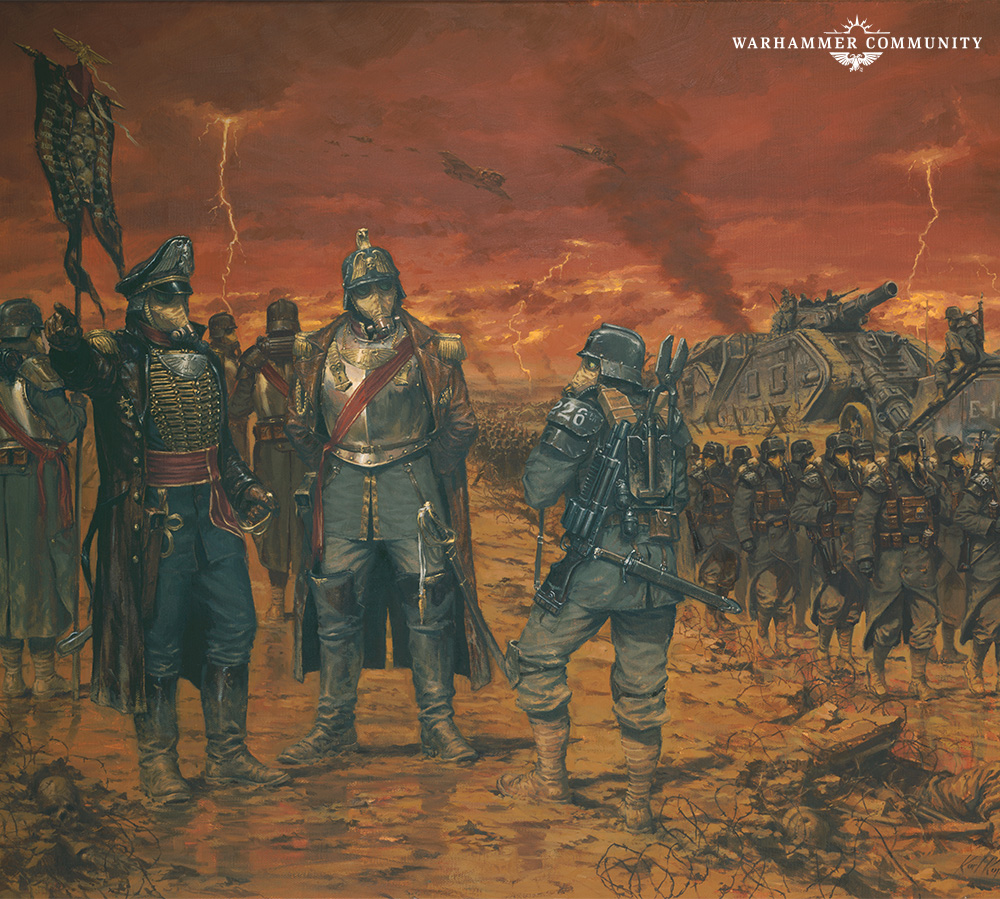
Rhu: The Death Korps really interest me because they’re a different vision of transhumanity to the Space Marines – almost like a kind of dark reflection. The Space Marines have been transformed into demigods. The Death Korps on the other hand have been stripped down by industrial processes into something wholly disposable. For me I wanted to imagine what that actually looks like outside of battle.
Having a Commissar – Valian Hesh – as the point of view character was my perfect way in. There’s some great long-standing lore about the Death Korps Commissars managing relationships between the Death Korps and their fellow guardsmen, which for me suggests a kind of awkwardness or otherness I wanted to explore. I imagine the average Korpsman as extremely comfortable and able to act in the worst and most traumatic battlefield situations possible, and utterly unequipped to deal with even basic human interactions.

Likewise, I wanted to examine the truth behind the memes and the popular rumours behind the Death Korps by imagining them in-setting. Valian, as liaison for the Death Korps with other regiments, plays up the reputation of the Death Korps. There’s ambiguity behind the myth. Are they really faceless cogs? Does some humanity remain? To what extent is the popular image of the Death Korps true, and to what extent is it a story built by the Imperium? What kind of culture and ways of existing emerge between the cracks?
The book looks at this in a general sense while examining it in detail with Valian’s interactions with Jens, his adjutant. Jens is a Prefectus Militant – essentially a trainee Commissar. She knows a lot about combat, but Valian is teaching her how to manipulate people, how to lead. The two have more in common than they might like. Valian, having been brought up in the Scholas, is in many ways just as instrumentalised and dehumanised as the Death Korps. I don’t think you can fully take the humanity away from anyone. But when you try, what’s left is really interesting.
WarCom: Death Rider is your first full-length Black Library novel. What did you learn over the course of writing it that you didn't know while writing shorts and novellas like Da Gobbo Rides Again and ‘The Sum of its Parts’?
Rhu: One of the nice things about working with Black Library is that the commissioning editors are incredibly experienced, know the lore very well, and are very supportive. Writing Death Rider was a daunting experience just in terms of sheer word count, but I felt looked after all throughout. Thanks Will!
The main thing that struck me writing Death Rider was that even in this very high-concept premise, with genetically engineered horses and alien empires and voidships crashing into planets, what a good story comes down to is people and their relationships with one another. My friend Nate’s Necron stories are a great example of this. People love them because they’re about characters that feel, ironically, human. Warhammer 40,000 is a great setting to write in because you can take humans, with all their foibles, give them convincing relationships with each other, but then subject them to situations of staggering horror, or even a kind of wonder, and explore what happens next.
Having a structure in place was really important. In a short story you’re much freer to riff your way to the finish line. But with Death Rider I really needed a strong sense of where it was going to end up before I could start writing it.
When you invest in something on the scale of a novel, you’re really aware, more than you are with a novella or a short, that you’re asking for a lot of a reader’s time and attention. If you’re reading the novel, I want you to know I’m grateful for that time and attention and I worked really hard to make sure that it’s rewarded.
WarCom: What particular challenges do the T'au Empire pose for the Death Korps that they might not find elsewhere?
Rhu: I think there can be a popular tendency to see the T’au as a little naive. I was conscious when writing Death Rider that I really wanted the T’au to feel impersonal and terrifying. They don’t have a POV character in the book – instead, the Imperial characters are reacting to a way of war that they are totally unprepared to face.
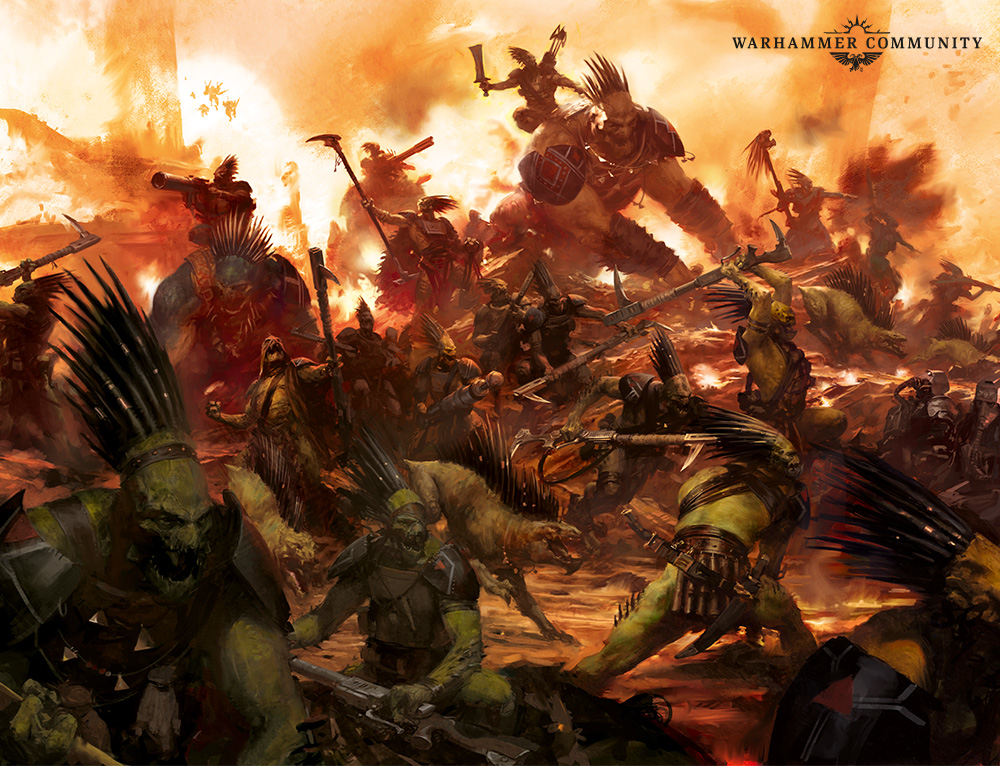
This is the T’au Empire with its back against the wall. The Imperium has refused diplomacy – that suits the T’au fine. They’re now facing packs of Kroot mercenaries, gunship kill-squads, rapid insertion forces – for the disorganised and shattered Imperial forces, it’s almost impossible to deal with. The T’au, who are highly advanced, flexible, and reactive, are a great foil to the inflexible, relentless Death Korps. I think they push each other to their limits.
WarCom: Without crossing into spoiler territory, was there a part of the book that you particularly enjoyed writing, or that resonated with you the most?
Rhu: I think sometimes there’s temptation, when you have a Commissar as a main character, to shy away from the grisly realities of their job. There’s a sequence in Death Rider where Valian, our Commissar, has to decide if he’s going to be a ‘Commissar’ or not, and makes his decision. I think what happens next is going to stick with people who read the book for a long time.
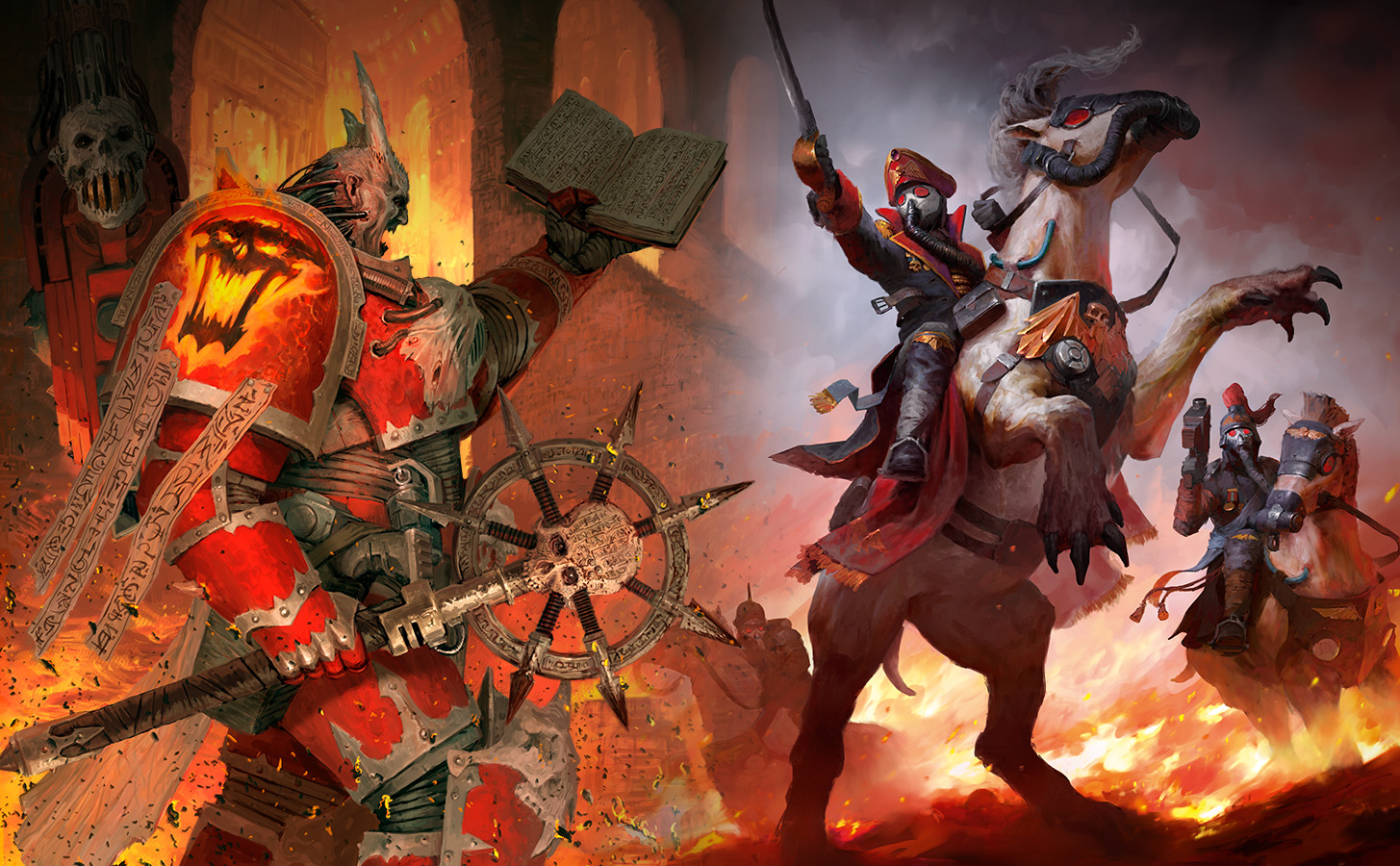
There were lots of other very fun sequences to write. The lovely thing about a first full-length novel is you have a lifetime of ideas and scenes you want to put in. There’s a long battle between T’au gunships, Leman Russ battle tanks, and Krieg steeds, and I thought the dichotomy between lance-mounted cavalry and railgun-armed skimmers felt like the kind of thing you could only find in Warhammer 40,000.
On a page by page basis, I loved writing about the Krieg steeds. They’re so bizarre and horrible. I really got to delve into their physiology and incredible capabilities. They made fantastic subjects to write about because they’re sort of like everything you are afraid a horse is going to be made real. They don’t panic under gunfire. They don’t care about being hurt. They will eat all of your fingers given half a chance. Valian’s Krieg steed is called Alice and is very much a character in the novel. I wanted to ride a line between the kind of growing tenderness found in classic horse-and-rider fiction with bracing confrontations with this genetic monstrosity.
WarCom: If you were a Commissar and had to be attached to an Astra Militarum regiment, which one would you choose and why?
Rhu: I did a lot of delving into old Imperial Guard Codexes for Death Rider and ended up looking up lots of obscure regiments to put into the book. One that sadly didn’t make it in was the Xymox Clan Woad warriors. What a name! The only thing we know about these guys is that their battlecry is ‘Belief will conquer bullets’ and their sole piece of art depicts a Woad warrior wearing a helmet, a lasrifle, some warpaint, and not much else. I think that kind of determination leaves a Commissar with a pretty easy job.
Thanks, Rhuairidh! Death Rider will be going up for pre-order next month, so keep an eye on Warhammer Community – and especially our Sunday Previews – to find out when you can add this gripping tale to your collection. If you want to read some of Rhu’s previous work tackling the trials and tribulations of the Astra Militarum, make sure to pick up The Sum of its Parts!
* That’s right, we’re taking credit for this one.